CubeSat & High-Altitude Balloon Missions
Over twelve years with the Cajun Advanced Picosatellite Experiment (CAPE), I served in progressively responsible technical and leadership roles supporting CubeSat and high-altitude balloon missions. My work included software development, systems integration, mission management, launch coordination, ground station development, and flight operations.
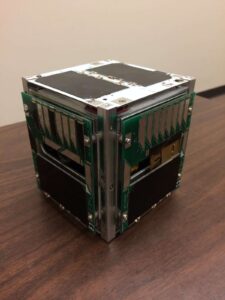
CAPE-3 CubeSat
Mission Overview
Developed a CubeSat designed to demonstrate triboluminescent crystal radiation detection while advancing Earth imaging, attitude control, and STEM education.
My Role
- Program Manager, Cajun Advanced Picosatellite Experiment (CAPE)
- Assistant Project Manager, CAPE-3 Mission
Led program planning, project scheduling, and multidisciplinary team coordination while contributing to the spacecraft’s Command and Data Handling (C&DH) and communications architecture. Responsibilities included designing the communications protocol and packet schema between the spacecraft and ground system, coordinating subsystem development, and serving as the primary liaison with external organizations including NASA’s Educational Launch of Nanosatellites (ELaNa) Office, the Federal Communications Commission (FCC), the International Amateur Radio Union (IARU), and the National Oceanic and Atmospheric Administration (NOAA).
Key Capabilities
- Triboluminescent radiation detection experiment (ARMOR)
- Earth imaging using active attitude stabilization
- Educational outreach supporting K-12 STEM programs
- Parrot repeater, digipeater, text-to-speech and DTMF communications
Launch Date: January 2021
Launch Provider: NASA ELaNa XX
Launch Site: Vandenberg Space Force Base, California
Status: Successfully completed mission and re-entered Earth’s atmosphere in February 2024.
CAPE-2 CubeSat
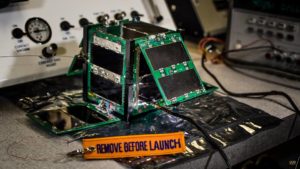
Mission Overview
Developed a next-generation CubeSat communications platform designed to improve data accessibility for the CubeSat community while demonstrating advanced amateur radio capabilities.
My Role
- Assistant Project Manager, CAPE-2 Mission
- Ground Station System Lead
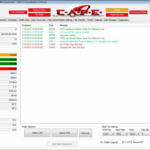
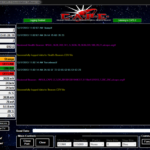
Served as the sole developer of the CAPE-2 Ground Station Software and helped architect the communications protocols and packet formats between the spacecraft and ground system. Coordinated project schedules across multidisciplinary engineering teams while serving as the primary technical liaison with NASA’s Educational Launch of Nanosatellites (ELaNa) Office, the International Amateur Radio Union (IARU), and the Federal Communications Commission (FCC).
Key Capabilities
- Deployable solar panels
- UHF and VHF communications systems
- Voice repeater
- Text-to-speech payload
- Twitter integration
- Digipeater
- File storage and transfer
- DTMF command interface
- Educational outreach for local schools
Mission Outcome
Launch Date: November 19, 2013
Launch Provider: NASA ELaNa-4
Launch Site: Wallops Flight Facility, Wallops Island, Virginia
Status: Successfully completed mission and deorbited.
CrawSat III
Mission Overview
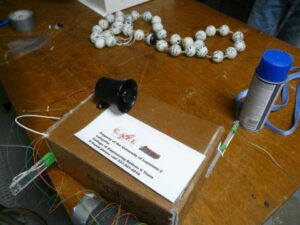
Expanded the CrawSat platform by integrating additional environmental sensors, multiple cameras, and educational payloads developed by local students.
Key Capabilities
- Pressure and temperature sensors
- Fuel gauge monitoring
- GPS tracking
- Three onboard cameras
- PIC microcontroller programmed in C
- PearlSat payloads from N.P. Moss Middle School
- Arduino sensor board from Northside High School
My Role
- Project Manager, CrawSat III Mission
- Software Developer, CrawSat III Mission
- Flight Director, CrawSat III Mission
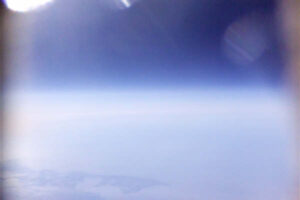
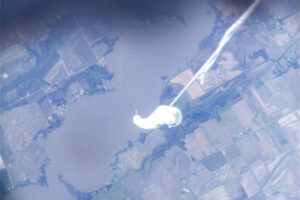
Served as Project Manager for the CrawSat III mission, leading a multidisciplinary team of undergraduate students through the design, development, testing, and execution of a high-altitude weather balloon mission. Contributed as one of the lead software developers responsible for the flight firmware while directing mission operations as Flight Director. Led launch-day planning and coordinated communications between the launch team, the CAPE Ground Station, and multiple recovery vehicles throughout launch, flight, and recovery operations.
Mission Outcome
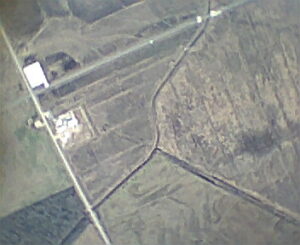
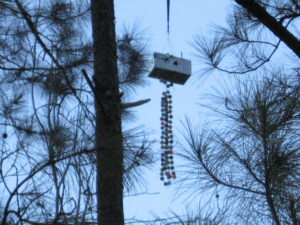
Launch: February 5, 2011 — Lake Charles, Louisiana
Recovery: Homochitto National Forest, Mississippi

CrawSat I
Mission Overview
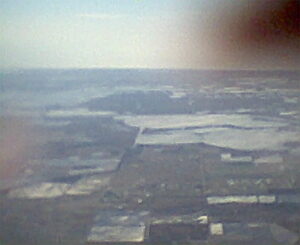
One of the earliest CrawSat missions, designed to validate environmental sensing, GPS tracking, radio communications, and onboard imaging for future balloon platforms.
Key Capabilities
- Pressure and temperature sensors
- GPS tracking
- PIC microcontroller programmed in C
- Dual onboard cameras
- PearlSat educational payloads from Paul Breaux Middle School
My Role
- Flight Director, CrawSat I Mission
Served as Flight Director after joining the CAPE Program to gain hands-on experience with the end-to-end execution of a high-altitude balloon mission. Directed launch-day operations from the CAPE Ground Station, coordinating communications between the launch team in Lake Charles, Louisiana, and three recovery vehicles during flight and recovery operations. Assisted in planning and executing mission logistics, providing the operational experience that laid the foundation for future leadership roles within the CAPE Program.
Mission Outcome
Launch: January 31, 2009 — Lake Charles, Louisiana
Recovery: Mississippi River near Donaldsonville, Louisiana